Exploring the Universe in Simple Steps, Astrophysics Made Easy for New Learners


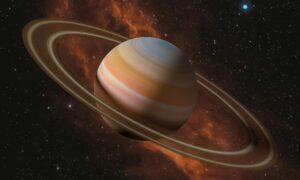
Astrophysics often sounds like a subject full of complex formulas, yet beginners can understand it with the right approach. When you learn it through simple ideas, the universe becomes less intimidating and more exciting. You see familiar things in a new way because astrophysics connects everyday experiences to the larger cosmos. As you move through each idea here, you will notice a smooth path that helps you build confidence while keeping the learning process fun and clear.
This field blends physics and astronomy, so it explains how space works from the smallest particles to massive galaxies. You do not need advanced math to start. Instead, you only need curiosity and a willingness to explore. Because many concepts repeat across different scales, learning one idea often helps you understand the next.
What Astrophysics Helps You Understand
Astrophysics studies the behavior of stars, planets, light, and energy. It focuses on how the universe forms and how objects interact. Scientists ask questions that sound simple, like how stars shine or why planets follow specific paths. Although the tools they use may be complex, the ideas become clear once you break them down.
One key part of astrophysics is observing light. Since we cannot travel to most objects in space, we rely on the light they send us. Telescopes collect this light and reveal clues about distance, temperature, speed, and composition. As you begin to see light as information, you understand why astrophysics depends on it so much.
Gravity and Its Role in Cosmic Motion
Gravity shapes almost everything in the universe. It pulls objects together, creates orbits, and builds large structures over time. You feel gravity every day, so you already know the basic idea. Now imagine that same pull working between stars and planets. When objects gather and grow massive, they attract even more material. This chain of events leads to the formation of solar systems.
Planets follow curved paths around stars because of gravity. As they move, they balance between being pulled inward and their own forward motion. This balance creates stable orbits that last millions of years. Once you understand this, you see how predictable and organized the universe truly is.
Light as a Window Into Space
Light carries information across vast distances. Even when a star is hundreds of light-years away, its light still reaches us. That light then tells us what the star is made of and how it behaves. The colors in the light reveal temperature. A slight shift in wavelengths tells us whether an object is moving toward or away from us.
Although you cannot hold light in your hands, you can think of it as a messenger. It leaves objects in space and travels until something captures it. Astronomers read this message and learn details that would otherwise remain hidden.
How Stars Begin and Evolve
Stars start in vast clouds of gas and dust. Gravity pulls these clouds together, compressing the material into a hot center. Once the core becomes hot enough, nuclear reactions begin. These reactions release energy that makes the star shine. While this process sounds intense, the idea is simple. Heat and pressure create light.
Stars remain stable for millions or billions of years. Over time, they start to run out of fuel. As reactions slow, the star changes shape and size. Small stars become white dwarfs. Large stars may explode and create supernovae. The blast spreads new elements throughout space, helping form future stars and planets. The life cycle repeats, showing how the universe constantly rebuilds itself.
How Planets Form Around Young Stars
Planets begin in the leftover material around a new star. Dust, ice, and rock swirl in a disk. Small pieces collide and slowly stick together. These small bodies grow as more material collects. Over millions of years, they become planets, moons, and asteroids.
This process follows simple rules. Objects bump into each other. Some stick. Some break apart. Over time, the pieces settle into stable paths. This same process happens around stars across the universe, so scientists use our solar system as a guide to study distant systems.
Galaxies and the Larger Cosmic Structure
Galaxies hold billions of stars, and they move together because of gravity. The Milky Way contains our solar system along with countless other stars and planets. When you look at a galaxy, you see a giant community of stars shaped by invisible forces like gravity and dark matter.
Galaxies move apart as the universe expands. Astronomers observe this movement by studying light. They see shifts in the wavelengths that reveal how fast galaxies are moving. These discoveries help scientists understand the age and evolution of the universe. With each new observation, our picture of the cosmos becomes clearer.
Easy Ways to Begin Learning Astrophysics
Beginners do not need fancy equipment. Start by watching the night sky. Look for planets when they appear brighter than the stars around them. Track the Moon’s phases. Notice how the sky shifts through the seasons. These small observations train your eyes to recognize patterns.
You can also explore apps that label stars or watch educational videos that explain concepts visually. When you combine different learning methods, your understanding grows more quickly. Try not to rush. Astrophysics becomes easier when you move step by step.
Why Astrophysics Matters for Everyone
Astrophysics helps you understand your place in the universe. When you learn how stars form or how galaxies move, you see how everything connects. The subject builds curiosity, problem-solving skills, and a sense of wonder about the world beyond Earth. It also reminds you that we share a universe filled with patterns, beauty, and endless possibilities.
For beginners, the most crucial part is to stay curious. As you discover new ideas, you gain confidence. The universe becomes familiar instead of confusing. Each concept leads to another, and soon you will enjoy learning even more.