Leathercraft Skill Development Guide for Intermediate and Advanced Makers


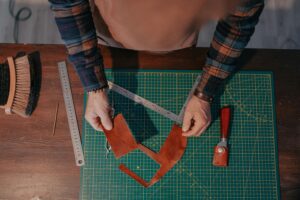
Leathercraft continues to attract makers who value precision, creativity, and hands-on work, and this Leathercraft Skill Development Guide helps experienced artisans refine their advanced techniques while exploring more advanced methods and creative directions.
As skills improve, makers often seek better control, cleaner finishes, and more refined design execution across different types of projects. Therefore, progressing beyond the basics requires both consistent practice and a deeper understanding of materials, tools, and craftsmanship principles that shape high-quality leather goods and long-lasting results.
Understanding Leather Types and Their Characteristics
Different leather types influence the outcome of any project, so makers must learn how each material behaves under pressure, handling, and long-term use. Full-grain leather offers durability and natural texture, while top-grain leather provides a smoother and more refined finish that suits polished designs. As a result, selecting the right material helps ensure both function and visual appeal while also improving the longevity of the finished product.
Moreover, advanced makers often experiment with vegetable-tanned and chrome-tanned leather to achieve specific results depending on the project requirements. Vegetable-tanned leather works well for tooling and carving because it responds to moisture and pressure, while chrome-tanned leather suits flexible and modern designs. Therefore, understanding these differences allows artisans to make smarter choices during production and avoid costly mistakes.
Mastering Precision Cutting Techniques
Accurate cutting forms the foundation of professional leatherwork, and even minor errors can affect the final product and overall symmetry. Skilled makers focus on maintaining steady hand control while using sharp tools to create clean, straight edges that align properly during assembly. Consequently, consistent cutting improves both appearance and structural integrity.
In addition, advanced artisans often use templates, rulers, and pattern guides to enhance precision and reduce variation across pieces. These tools help maintain consistency in repeated designs and support efficient production. As a result, makers can produce high-quality items with uniform dimensions while reducing material waste.
Developing Advanced Stitching Methods
Stitching plays a critical role in durability and design, so improving stitching techniques helps elevate craftsmanship to a professional level. Saddle stitching remains a popular method because it creates strong, balanced seams that hold well over time. Therefore, mastering this technique ensures long-lasting results and a clean visual finish.
At the same time, makers explore decorative stitching styles to enhance visual appeal and add character to their work. Creative thread choices, spacing, and patterns introduce unique design elements that stand out. Consequently, stitching becomes both a structural necessity and an artistic feature in advanced leathercraft.
Improving Edge Finishing Skills
Edge finishing transforms a basic project into a polished and professional product, and skilled makers dedicate time to refining this often overlooked step. Burnishing edges creates a smooth and refined look, while edge paint adds color, protection, and durability to the finished piece. As a result, finished edges improve both quality and customer perception.
Furthermore, advanced makers experiment with different finishing compounds, sanding techniques, and tools to achieve consistent results across various leather types. Each method requires patience, attention, and practice to master. Therefore, strong edge finishing skills help distinguish high-end craftsmanship from average work.
Enhancing Tooling and Carving Techniques
Tooling and carving allow makers to add depth, texture, and personalization to leather projects, making each piece unique and visually engaging. By using stamping tools and carving knives, artisans create detailed patterns that reflect their individual style and creativity. Consequently, these techniques expand the artistic potential of leathercraft.
Additionally, experienced makers practice controlling pressure, spacing, and alignment to achieve clean and professional designs without distortion. Consistency and precision play a major role in achieving high-quality results. Therefore, refining tooling skills helps produce intricate, detailed, and visually appealing leather goods.
Designing Functional and Aesthetic Products
Design plays a central role in advanced leathercraft, as makers must balance function with style to create products that perform well and look appealing. A well-designed product meets user needs while maintaining visual harmony and structural strength. As a result, thoughtful planning improves both usability and overall presentation.
Moreover, makers often sketch ideas, test layouts, and create prototypes before final production begins. This process helps identify design flaws early and allows adjustments before committing to materials. Therefore, strong design skills lead to more efficient workflows and better finished products.
Building Consistency Through Practice and Evaluation
Consistent practice remains the key to mastering advanced leathercraft skills, as repetition helps refine techniques and improve control over time. Makers who dedicate time to regular projects develop stronger hand coordination and confidence in their work. As a result, their craftsmanship improves steadily with each completed piece.
At the same time, evaluating finished products helps identify areas for growth and improvement. Constructive self-review allows artisans to adjust techniques, fix mistakes, and refine their process. Therefore, combining practice with reflection leads to continuous skill development and long-term success.
Selecting and Maintaining Professional Tools
High-quality tools support skill development, so investing in reliable equipment becomes essential for serious makers who want consistent results. Sharp knives, durable stitching tools, and accurate measuring devices improve overall efficiency and precision. Consequently, proper tools help achieve cleaner cuts and tighter construction.
In addition, regular maintenance ensures tools perform at their best and remain safe to use over time. Sharpening blades, cleaning surfaces, and storing tools properly extend their lifespan. Therefore, consistent care allows artisans to maintain accuracy and efficiency in every project they complete.